Spa management software runs a spa or wellness centre from one system: online booking, therapist and room scheduling, payments, discounts and reports. The thing that separates it from a general calendar is that it books the therapist, the room and the time together, so none is double-booked. This page explains what it is and how a day runs on it — to compare products, read the spa software buyer's guide.
What makes a spa different
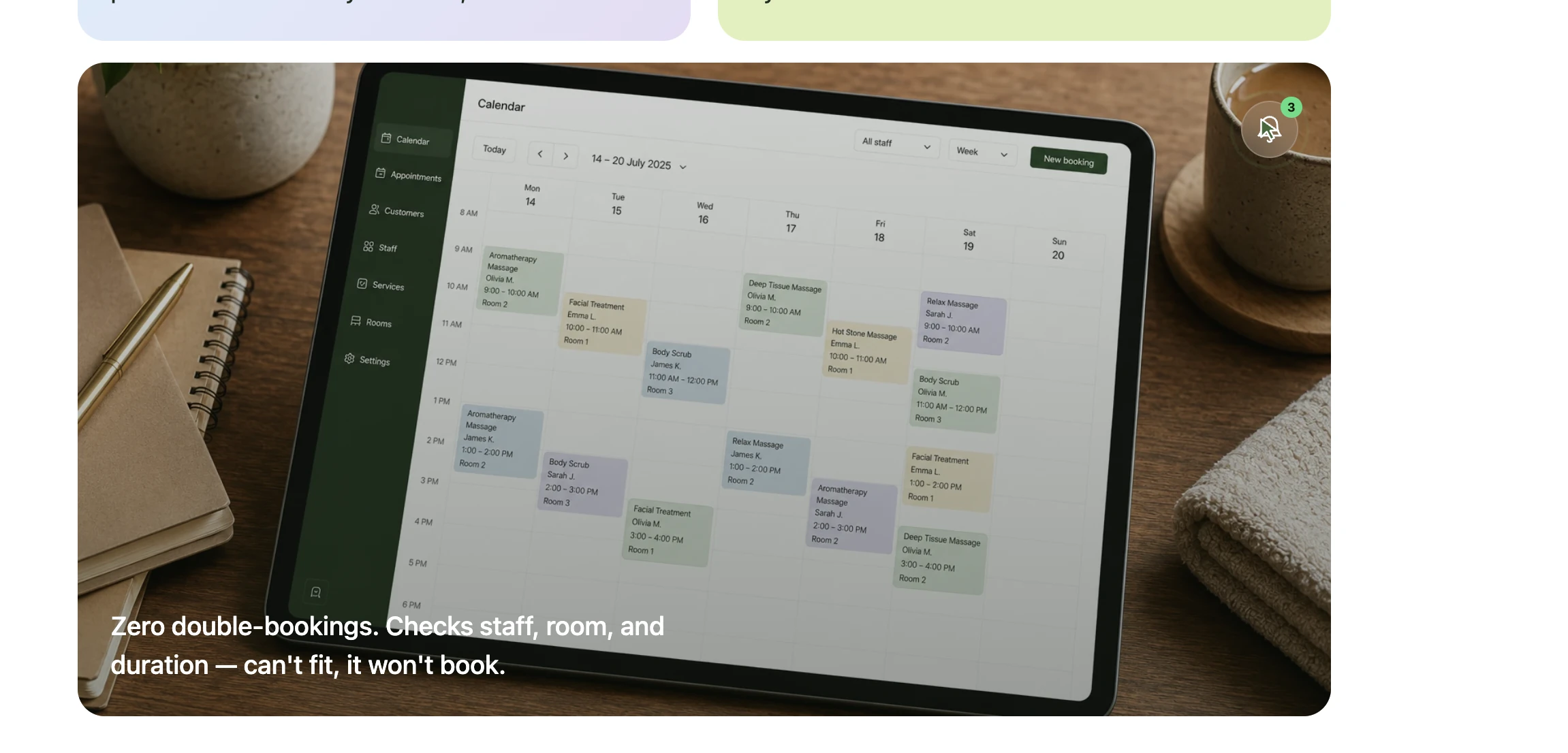
A treatment needs a person and a room for a set length of time. Three things have to line up, not one, and that is the whole reason generic booking tools struggle here. Book only the therapist and two guests end up assigned the same room. Book only the room and a therapist is promised to two places at once. Spa software books therapist, room and time as a single booking and refuses the clash, so a confirmation means something.
The second difference is that treatment lengths genuinely vary — a 30-minute foot massage and a 120-minute package are not interchangeable blocks — and each one needs turnaround time for cleaning and resetting the room. Leave that out and the schedule looks correct on screen while running twenty minutes late by noon.
A spa day, from opening to close
Opening
The front desk opens the day and sees two things side by side: which therapists are in, on leave or covering at another branch, and which rooms are free when. Therapists mark themselves present. Nothing about the day depends on the owner being reachable by phone.
During the day
Guests book online, choosing a treatment and seeing only slots where a therapist and a suitable room are both genuinely free. Walk-in guests and hotel referrals are added by the desk the same way. Because the clash is refused at the point of booking, the failure mode that annoys guests most — arriving to be told the room is taken — largely disappears. Two guests, one room walks through how that used to happen.
As each guest leaves, the payment is recorded against the booking by method: cash, card or online, with part-payments recorded as part-payments. Memberships, packages and vouchers are redeemed against their balance rather than noted in a book. Any discount above a staff member's limit goes to a manager and the approval is stored with the booking.
Closing
The daily close compares booked, delivered and collected per branch. Done this way it is a check, not a reconstruction — and when something does not agree, the booking responsible is named rather than hunted for. Cash short at closing covers what the gaps usually turn out to be.
What it adds up to across the month
Revenue by branch and by treatment, which therapists are busiest and which earn most, discounts given and who approved them, and the hours each therapist actually worked — which is what commission and payroll are calculated from. None of this needs a separate exercise at month end; it is the same records the daily close already used.
Spas with more than one location
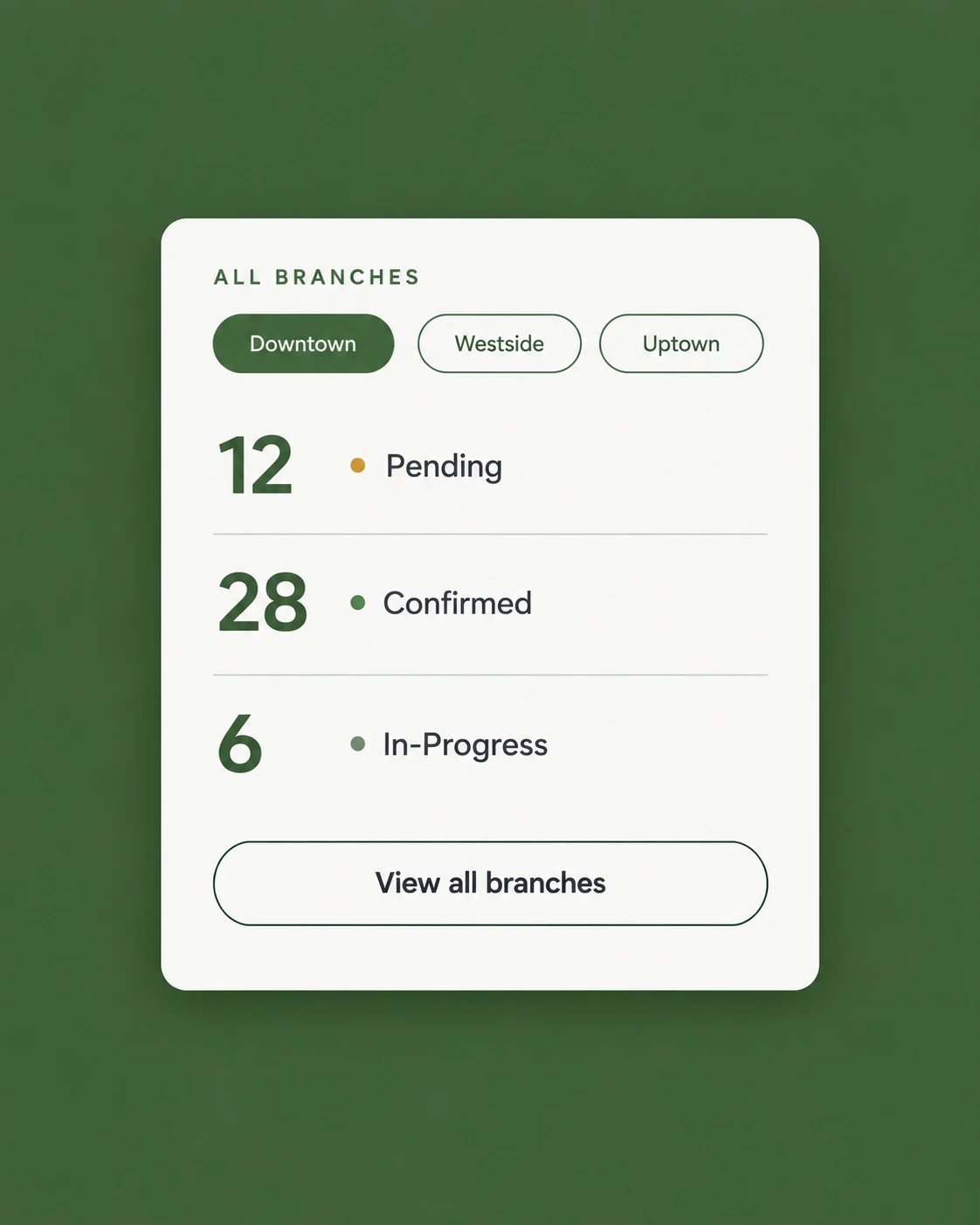
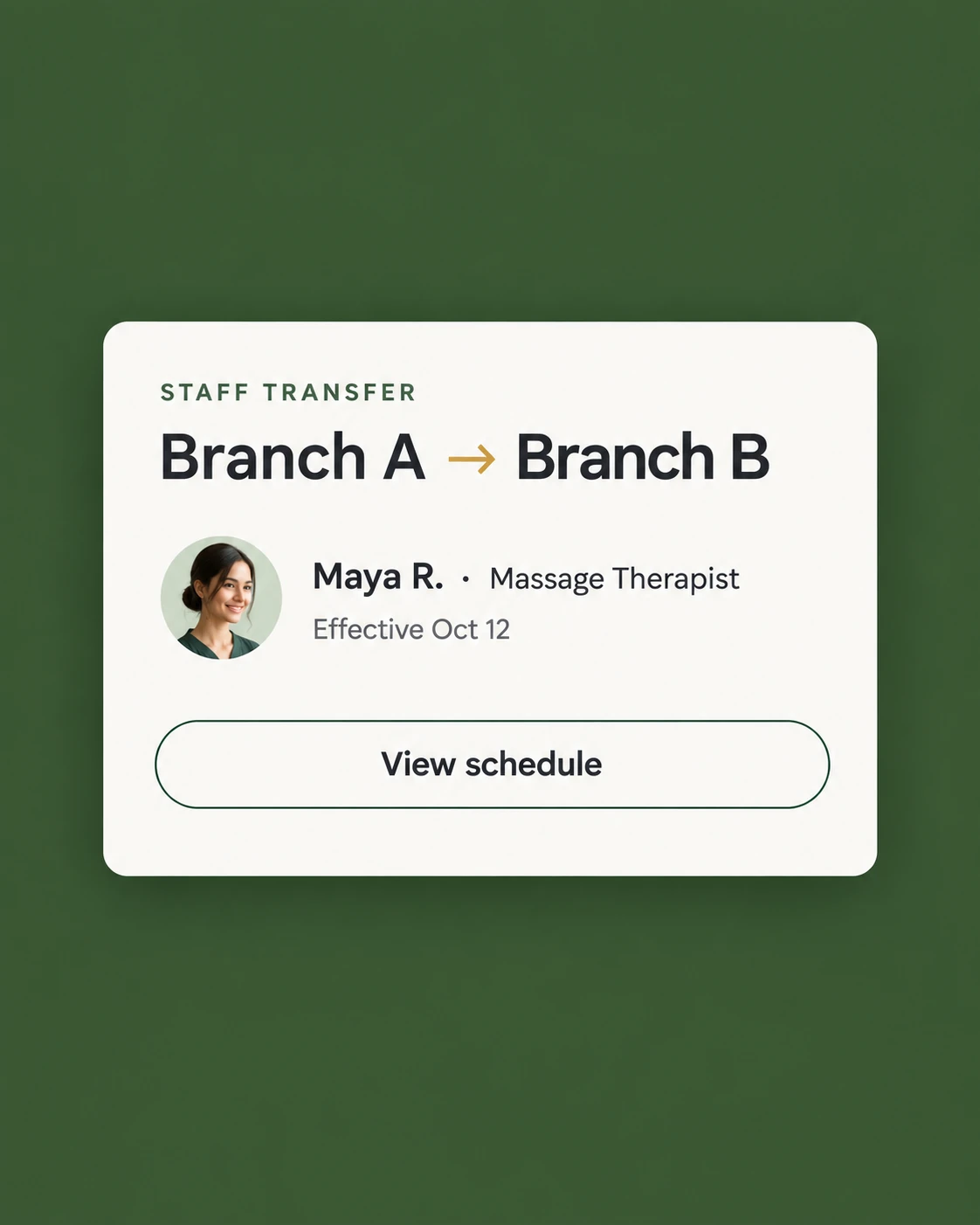
A second spa location adds new problems: therapists who work at both, price differences and an owner who cannot see every site at once. Look for software that schedules staff transfers in advance and gives one dashboard for all locations. See multi-location booking software and our guide to managing a spa.
What it does not do
Zennly records what was charged and how it was paid against each booking; it is not a POS and does not issue tax invoices. Guest outreach is by email as standard, with SMS and WhatsApp available on request rather than on by default. There is no Khalti or eSewa integration and no open API today.
Where Zennly fits
Zennly is built for multi-branch spas, with therapist and room booking, discount approval, payment tracking and a daily close. Nuad Thai Spa Kathmandu runs four branches on it. If you run a single treatment room, a simpler calendar may be enough. See how Zennly works for spas and the Nuad Thai case study.
Common questions
What is spa management software?
It is software that runs a spa's online booking, therapist and room scheduling, payments, discounts and reports in one system. The defining difference from a general calendar is that it books the therapist, the room and the time as one booking, so a guest is never confirmed into a slot that cannot physically happen.
Why does a spa need the room booked as well as the therapist?
A treatment needs both. If only the therapist is booked, two guests can be confirmed for the same room; if only the room is booked, a therapist can be promised to two rooms at once. Booking them together is what makes the confirmation trustworthy.
What does a spa actually do in the software each day?
Open the day and see which therapists are in and which rooms are free, take bookings and arrivals against a therapist, room and treatment duration, record each payment by method as the guest leaves, send discounts above a staff limit for approval, then run the daily close per branch.
Do I need spa management software for one location?
A single room can run on a simple calendar. Software pays off when you have several therapists and rooms, or plan a second location.
Does it handle turnaround time between treatments?
It should. A room needs cleaning and resetting before the next guest, so that time belongs in the treatment's duration rather than being hoped for. Otherwise the schedule looks fine and runs late from mid-morning onward.
Spa, wellness center or wellness centre?
These describe the same kind of business. 'Center' is the US spelling and 'centre' is used in the UK, Canada, Australia, the UAE and Nepal. The software is the same.
Related reading
- Best spa software in Nepal: how to choose the right one
- Spa booking and management software
- Two guests, one room: how double-bookings actually happen
- An AI receptionist for a spa or salon: what it can and cannot do
- Case study: a four-branch spa on Zennly
- Glossary: spa management software
- Prepaid memberships with wallet balances and renewals
- Monthly payroll and therapist commission