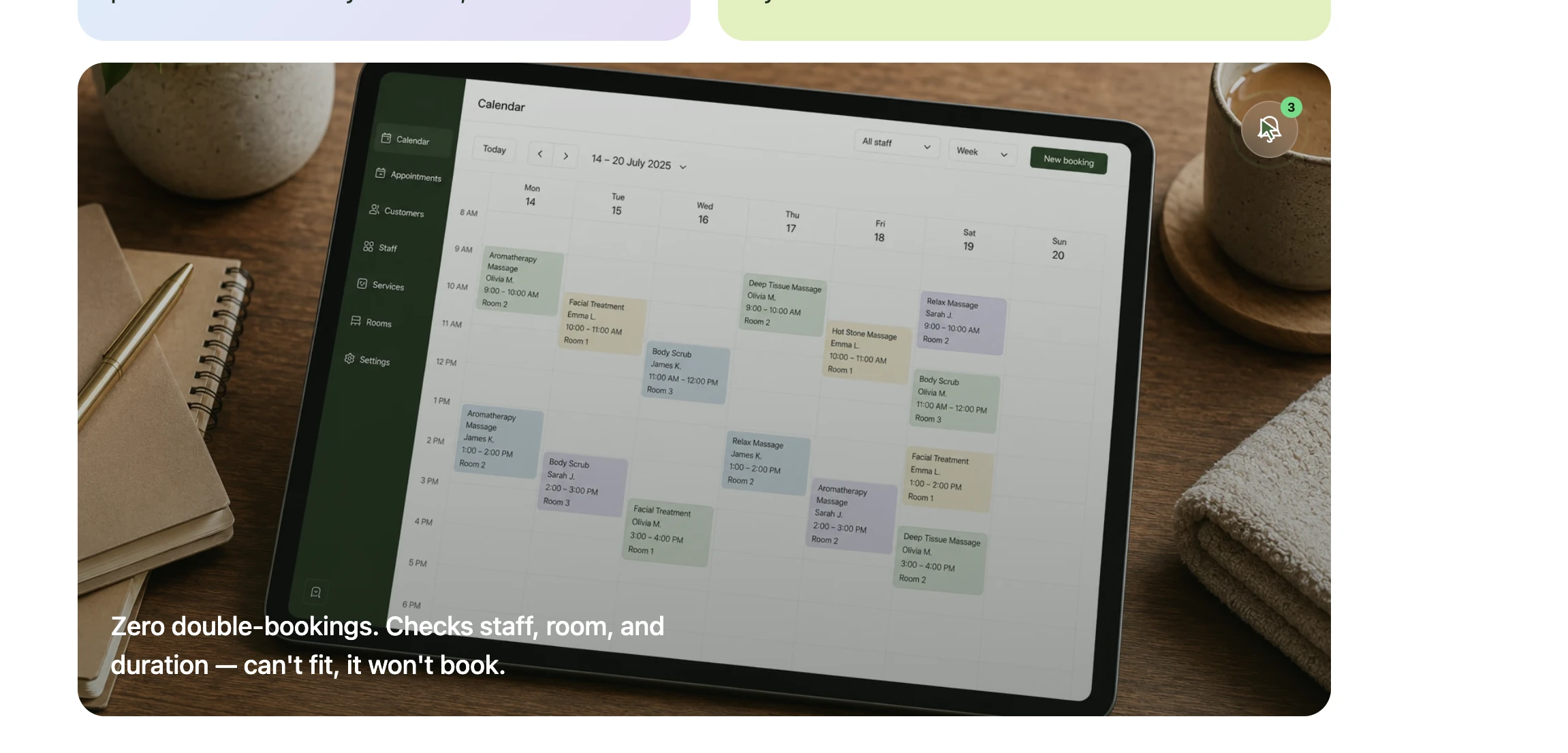

In the Dashain and Tihar weeks a salon, parlour or spa in Nepal can take a month's bookings in a fortnight, with part of the team on leave. The preparation that matters is done before the rush: settle leave, cap the long services you accept per day, require a deposit on bridal and long treatments, and keep closing the day every day. Almost every festival-season failure traces back to one of those four being skipped.
This is the one stretch of the year when the constraint is capacity rather than customers. That sounds like a good problem, and it is, but it changes which mistakes are expensive. In a normal month a missed booking costs you a slot you would not have filled anyway. In festival season every slot was sellable, so a double-booking, a no-show on a four-hour service or a stylist you thought was working costs real money that cannot be recovered — the week is gone.
1. Settle staff leave before bookings open, not during
Everyone wants some of the festival at home, and that is reasonable. What does not work is settling it while bookings arrive, because the desk ends up booking against a roster that is still changing. Collect the requests, agree who covers which days, and put the result in the system so the person taking bookings is only ever offered staff who are genuinely in.
Expect it to move anyway. Someone will travel to their village a day earlier than planned. What matters is that when it moves, the bookings that person was holding are visible immediately rather than discovered by a client at the door — the recovery is covered in what to do when a therapist is absent.
2. Cap long services per day
A bridal session or a long package can occupy one staff member for most of a day. Accept three of those on the same day with four staff in and you have no capacity left for the forty clients who want threading, a facial or a haircut — which is both more revenue and more of your regulars.
Decide the limit in advance: how many long services per day, per branch. Then hold it. The pressure to break it always arrives in person, from a good client, and that is exactly when the day falls apart.
3. Take a deposit on anything long
A no-show in a normal week is an annoyance. A bridal no-show in festival season is an empty day you turned other work away for. A deposit changes the conversation from a verbal promise into a commitment, and it filters out the dates people are holding "just in case" while they decide.
Record it against the booking, not in a notebook or a chat. The common failure is not that the deposit was never taken; it is that the staff member who took it is not in when the client arrives, and nobody can say what was paid. Bridal makeup booking in Nepal covers the deposit side in more detail.
4. Keep online booking open, especially now
The instinct when the phone will not stop is to control everything through the desk. It has the opposite effect: the desk becomes the bottleneck, calls go unanswered during the busiest hours, and a caller who cannot get through books somewhere else. Online booking absorbs the straightforward requests — a cut, a facial, a massage at a specific time — and leaves the desk for the complicated ones that actually need a conversation.
It also works at 11pm, which is when a surprising share of festival bookings get made. See bookings missed after hours.
5. Run a waiting list instead of saying no
Festival cancellations happen late and they happen often, because plans change around family. If you say "we are full" the slot stays empty when it frees up. If you take a short waiting list for each day, the freed slot has someone to offer it to within minutes. See waiting list management.
6. Close the day every day, even at midnight
The tempting shortcut is to let the paperwork pile up and sort it out after Tihar. It does not survive contact with the volume. Cash takings are larger than usual, more staff than usual handled money, more discounts than usual were given in a hurry, and a fortnight's worth of all that is not reconstructable from memory.
If every payment is recorded against its booking by method as the client leaves, the close stays a short check regardless of how busy the day was. See what the daily close should actually take and why the cash comes up short.
7. Discounts: decide the rule before the pressure
Festival season is when discounting is least necessary and most likely — a staff member under pressure gives a regular a bit off to keep things moving. Set the limit each role can give, route anything beyond it to a manager, and let the record show who approved what. See how discount approvals work.
On promotions: aim them at the quiet days
A discount on your busiest afternoon gives away margin on capacity you would have sold at full price. Two better uses of a dated offer: the slower days immediately before the festival, and the fortnight after, when the rush stops abruptly and the calendar looks empty. That second one is also the right moment to reach the clients who came once during the festival and have not been back — see winning back lapsed customers and dated promotions.
After the festival: write down what actually happened
Which days were full, which services sold out first, how many long bookings you turned away, where the schedule broke. Next year's roster and caps should come from that record rather than from a general sense that it was busy. If the bookings are in one system, the record already exists — it is the reports, not a diary entry you have to remember to write.
See how Zennly handles rosters, booking limits, deposits and the daily close for salons and parlours and spas, or try the free demo with your own service list.
Common questions
How should a salon in Nepal prepare for the Dashain and Tihar rush?
Settle staff leave before you open bookings, cap how many long services you take per day so the schedule stays honest, require a deposit on bridal and long treatments, keep online booking open so the desk is not on the phone, and close the day every day rather than catching up after the festival.
Why do festival bookings cause more double-bookings than usual?
Because demand outruns the booking process. Staff start accepting dates verbally and over chat faster than anyone writes them down, and half the team is on leave at some point in the fortnight. The two together are what produce a clash.
Should a salon take deposits during festival season?
For long and high-value services, yes. A bridal session or a four-hour package occupies a staff member for most of a day at the time of year when that capacity is scarcest, so it is worth committing. Record the deposit against the booking so it is not lost between staff.
How do you handle staff leave during Dashain?
Collect the requests and settle them before bookings open, not while they arrive. Then put the agreed roster in the system so whoever is at the desk books against people who are genuinely in, rather than against a team that exists only on paper.
Is it worth running a festival promotion?
Usually not a discount on your busiest days, which just gives away margin on capacity you would have sold anyway. A dated offer is better aimed at the quiet days before the festival, or at bringing back lapsed clients afterwards when the rush ends.
Related reading
- Waiting lists: filling a slot when someone cancels
- Bridal makeup booking: wedding-season dates and deposits
- Walk-in queue management: cutting the wait
- When a therapist is absent and the branch is short-staffed
- Winning back customers who stopped coming
- Dated promotions that show in online booking
- Salon and beauty parlour booking software